


The First Naval Aviators

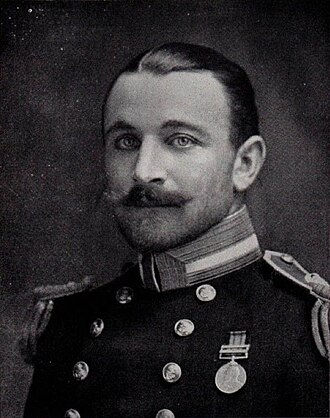
Lieutenant George Colmore was the first member of the Royal Navy to qualify as a pilot, receiving his Royal Aero Club (RAeC) ticket in 1910 after paying for his own flying lessons. A few months later, the RAeC offered the navy two aircraft to train further pilots and the Admiralty called for volunteers for flying training. The volunteers had to be single and able to pay their own RAeC membership fees. 200 applications were received and four officers were selected as the navy’s aviation pioneers, one of whom was Lieutenant Charles Samson, of which more anon. The other three were Lieutenants Arthur Longmore and Reginald Gregory, and Lieutenant Eugene Gerard of the Royal Marines Light Infantry. The first naval rating to qualify was Leading Seaman O’Connor. He received his Royal Aero Club’s certificate at the Central Flying School at Upavon on 3 September 1912.
Samson meanwhile, went on to become a leading pioneer in naval aviation. He was the first to pilot an aircraft launching from a ship at sea. When war broke out in 1914, he commanded the first Royal Naval Air Service (RNAS) squadron to arrive in France. With too few aircraft for the pilots at his disposal, Samson deployed many of them in private cars to mount reconnaissance patrols of the Belgian and French countryside. Once armed with a machine gun, these cars were able to mount aggressive patrols into German-held territory and to frustrate the German cavalry’s own reconnaissance patrols. Within a month, his force was reinforced by more vehicles fitted with rudimentary armour and the Royal Naval Armoured Car Division was formed. I relate some of the division’s experience in my third novel, The Wings of the Wind. The book was inspired by Samson’s autobiography, Flights and Fights.
In 1915, Samson was sent to the Dardanelles in command of another RNAS squadron. He and his men conducted photo reconnaissance missions as well as pioneering the use of wireless telegraphy to direct the gunfire of the battleships. When the periscope of the submarine HMS E11 was damaged by Turkish gunfire in the harbour of Constantinople, Samson personally delivered a replacement to the Sea of Marmara (my first novel, The Custom of the Trade, tells the tale of the outstandingly successful submarine campaign in the Dardanelles). After a year, he was given command of a former Isle of Man passenger steamer that had been converted to carry seaplanes. From the coast of Syria and Palestine his ship mounted aerial operations against the Turks, but was sunk by Turkish gunfire in January 1917.
After the war, Samson transferred to the RAF and retired on the grounds of ill health as an air commodore in 1929 and died of a heart attack in February 1931.


Comments